
Aspire Veterinary Center

Urgent Care Minor Wounds & Bite Triage
La Palma, CA · Trauma Node

Dog Bite & Wound Triage:
Does My Pet Need
Sutures?

Bite wounds and lacerations are high-frequency urgent care visits where owners often hesitate because the wound “doesn't look that bad.” This guide explains why small punctures are often more dangerous than large scrapes.
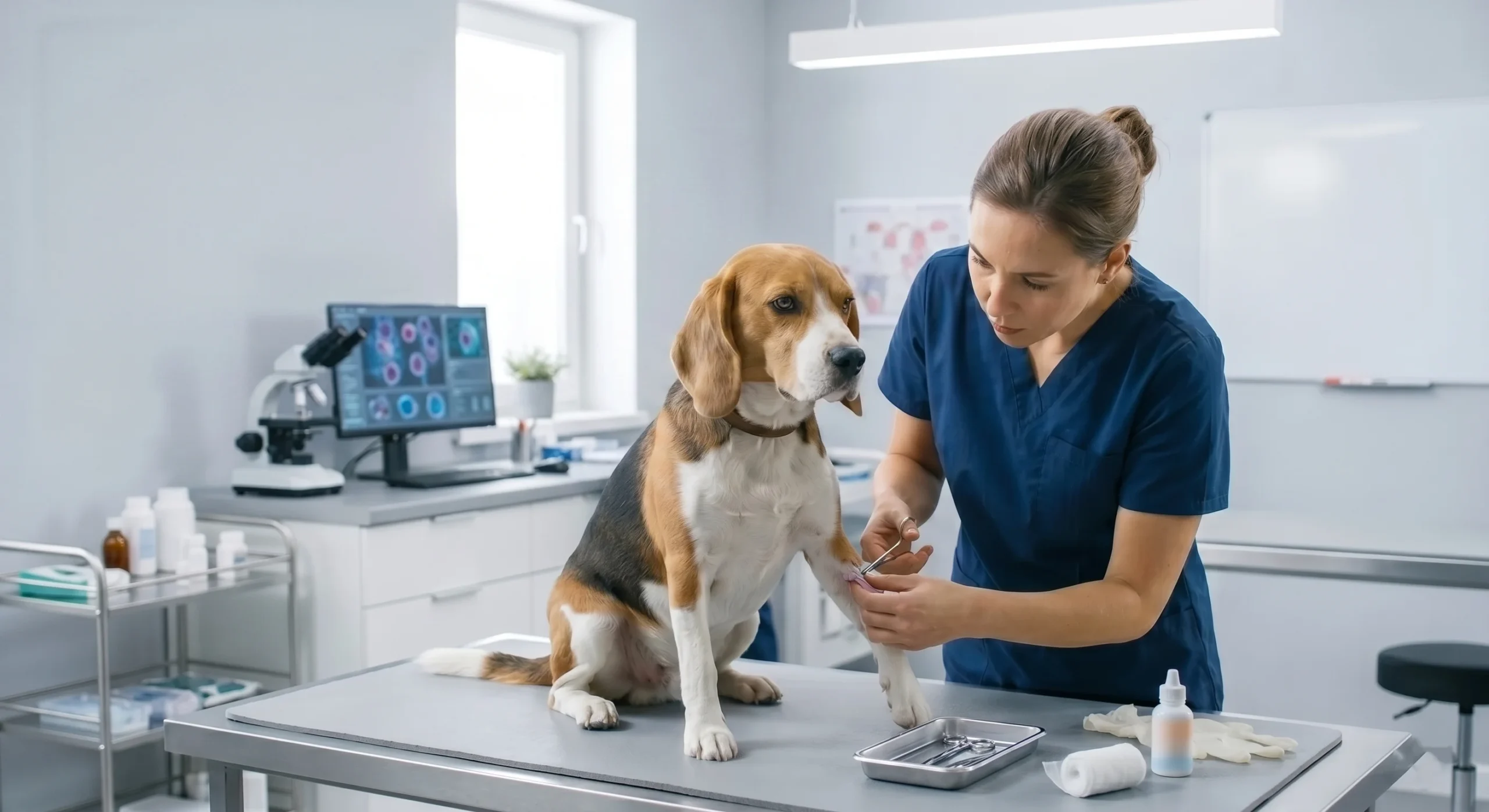
Veterinarian treating a dog wound at Aspire Veterinary Center in La Palma CA

The 60-Second Answer

Any wound that penetrates the full thickness of the skin—especially bite wounds—requires veterinary attention within 6–8 hours. This “Golden Period” is critical for safe suturing before bacteria colonize the tissue. While a bite may look like a small “puncture,” it often involves significant “pocketing” and crushing of the underlying muscle (The Iceberg Effect) that leads to severe infection or abscess if not professionally cleaned and drained.

The Wound Triage Matrix

Assess your pet's wound type and determine the level of care required.

Wound Type Appearance Action Level
Simple Scrape (Abrasion) Superficial, “Oozing” but not deep. Monitor / Clean at Home
Skin Tear (Laceration) Edges are separated; muscle visible. URGENT (Needs Sutures)
Bite Puncture Small hole, but skin is “loose” around it. IMMEDIATE (Risk of Abscess)
Uncontrolled Bleeding Blood pulsing or flowing steadily. EMERGENCY (Apply Pressure / Go)
Old Wound (Abscess) Swollen, hot, or foul-smelling discharge. URGENT (Needs Drainage)

The Technical “Why”

Three mechanisms that make bite wounds far more dangerous than they appear on the surface.

The Iceberg Effect

IMMEDIATE

Bite Wounds

A dog's canine teeth act like surgical clamps. They don't just puncture the skin; they pull and shake, separating the skin from the underlying muscle. This creates a “dead space” or pocket. Because dog mouths are teeming with bacteria (Pasteurella), these pockets become incubation chambers. Treating the surface hole without flushing the “iceberg” pocket leads to systemic infection.

The Golden Period

URGENT

Suture Window

The first 6–8 hours after an injury are the “Golden Period.” During this time, the wound is considered “contaminated” but not yet “infected.” If you wait until the next day, the bacteria have moved into the tissue, making it unsafe to sew the wound shut. In these cases, we must leave the wound open to heal by “second intention,” which is a longer, more expensive recovery.

Hidden Crushing Injury

CRITICAL

Blunt Force Trauma

Blunt force trauma from a bite can cause “tissue necrosis” (cell death) that doesn't show up for 24–48 hours. Professional assessment by Dr. Lam ensures that we aren't just fixing the skin, but checking for underlying rib fractures or internal organ bruising.

Aspire Urgent Care: Surgical Integrity

Entity — Attribute — Value

Entity

Aspire Veterinary Center

30 Centerpointe Drive (Suite 6), La Palma, CA 90623

Attribute

Surgical Integrity

Sterile surgical debridement, localized anesthesia, and drain placement

Value

“Dead Space” Management

Professional pocket irrigation and drain placement to eliminate bacterial incubation chambers.

Don't wait for the abscess to form.

Secure a same-day wound assessment at Aspire now. Early intervention is the difference between a simple suture and a lengthy surgical drainage.

Secure a Same-Day Assessment

Frequently Asked Questions

Answers La Palma pet owners ask about bite wounds and lacerations.

Wounds should ideally be sutured within 6 to 8 hours of the injury. After this “Golden Period,” the risk of infection increases significantly, and the wound may need to be left open to heal or require more invasive surgical debridement.
Bite punctures often involve “The Iceberg Effect,” where the skin is separated from the underlying muscle, creating a pocket for bacteria. If these pockets are not professionally flushed and drained, they frequently develop into painful abscesses or cause systemic infection.
While Neosporin is generally safe for superficial scrapes, you should never use it on deep punctures or lacerations. It can trap bacteria inside a deep wound. Additionally, many pets will lick the ointment off, causing further irritation or GI upset.

Return to Hub

Urgent Care Resource Center

This is one of 10 triage guides in our urgent care resource system. The hub covers all common urgent pet conditions with the same clinical precision.

All Urgent Care Guides
Scroll to Top